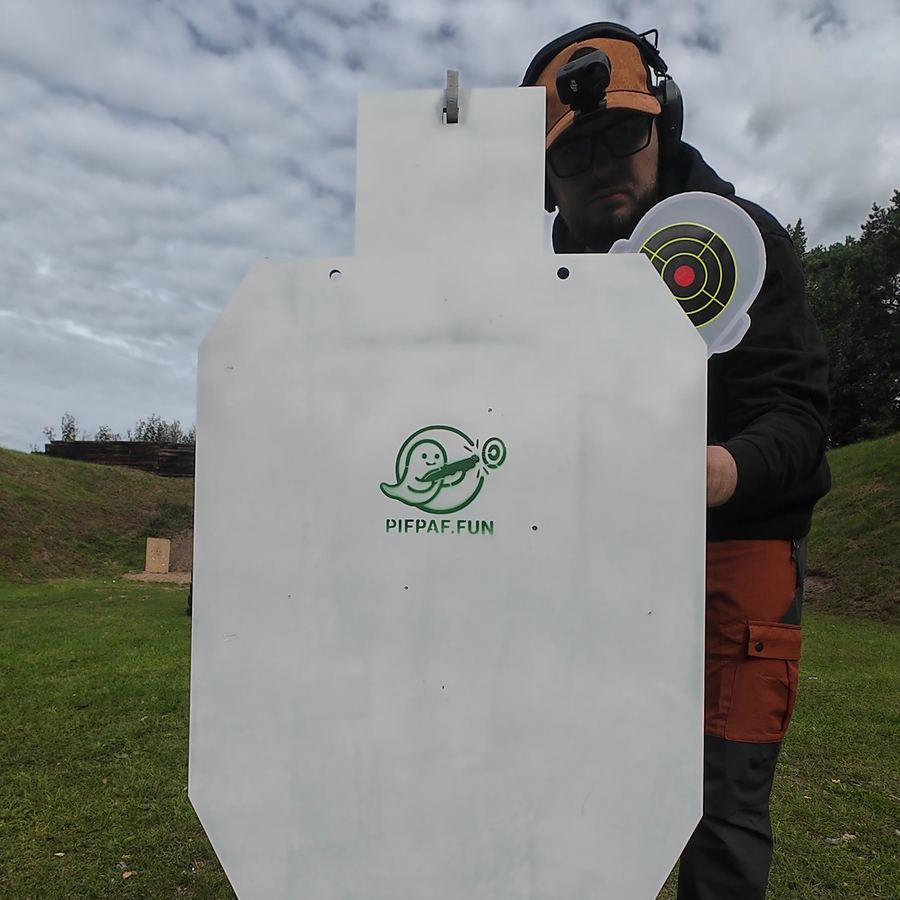
Meet Łukasz Wychylski – a robotic hostage rescue target that leans out from behind the hostage exactly the way you taught it. Left shoulder, right shoulder, or nothing but the top of the head above cover. You run it from your phone – the rest is your reaction and your decision.
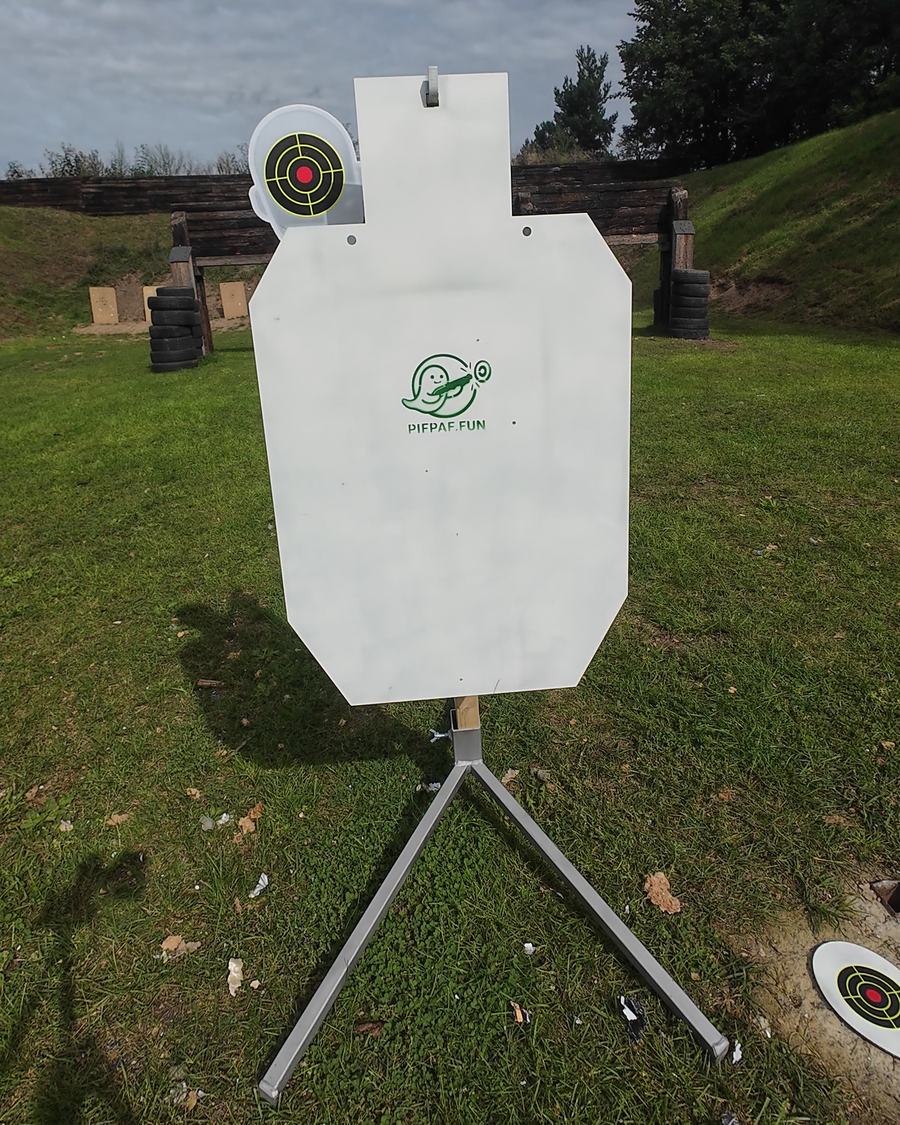
On the line · the head leaning out from behind the hostage
Read the file before you hear the name. Sounds familiar? It should – ranges all over the world train against someone like him.
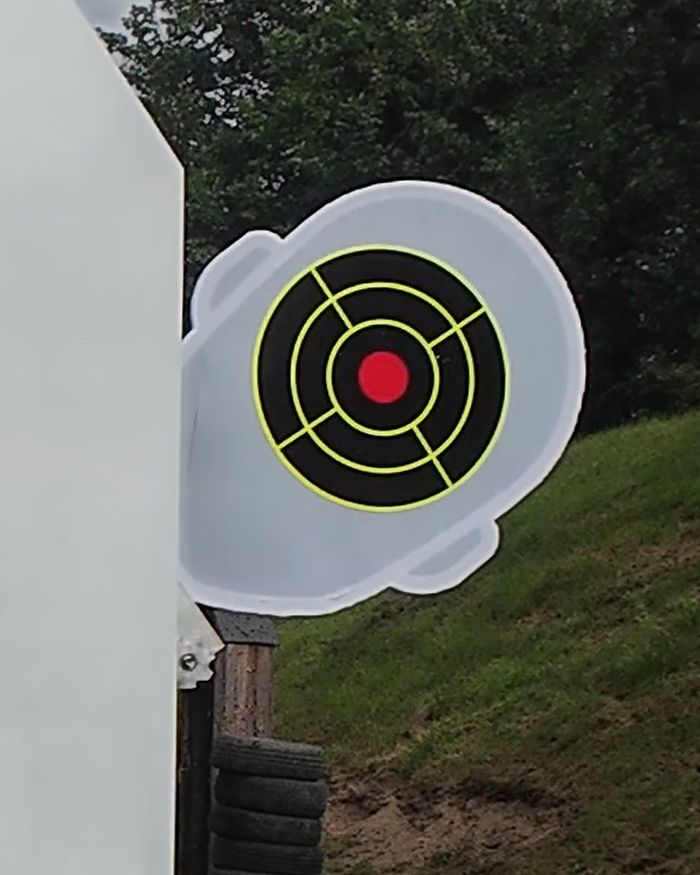
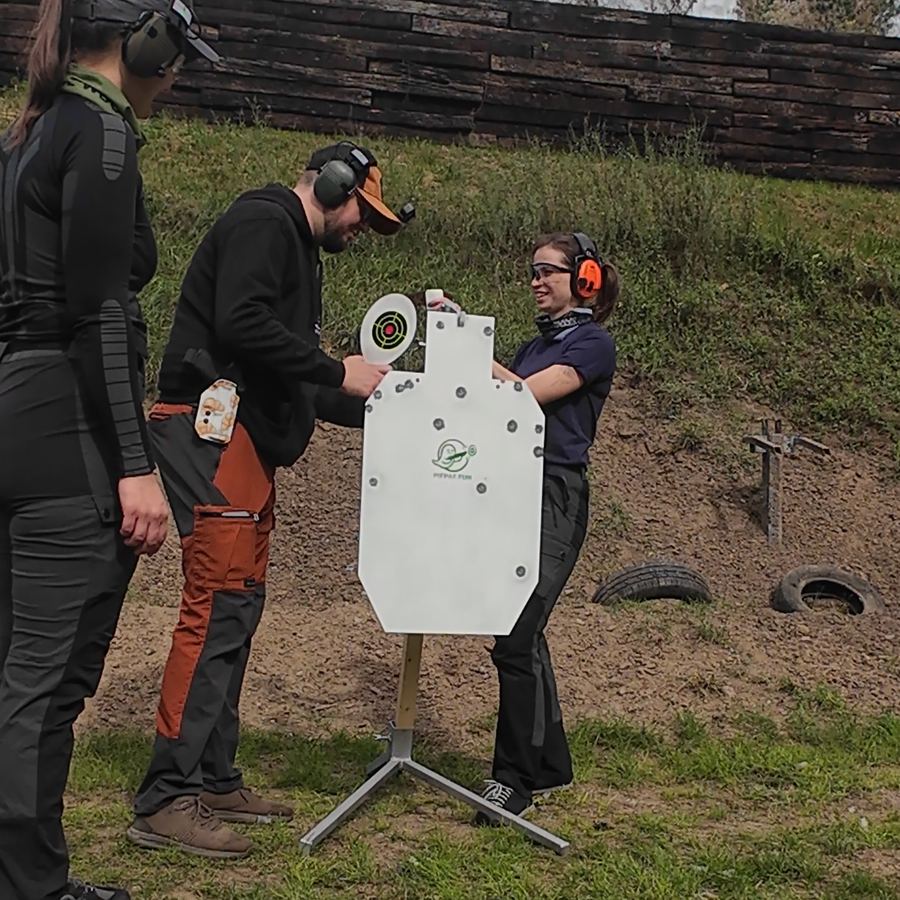
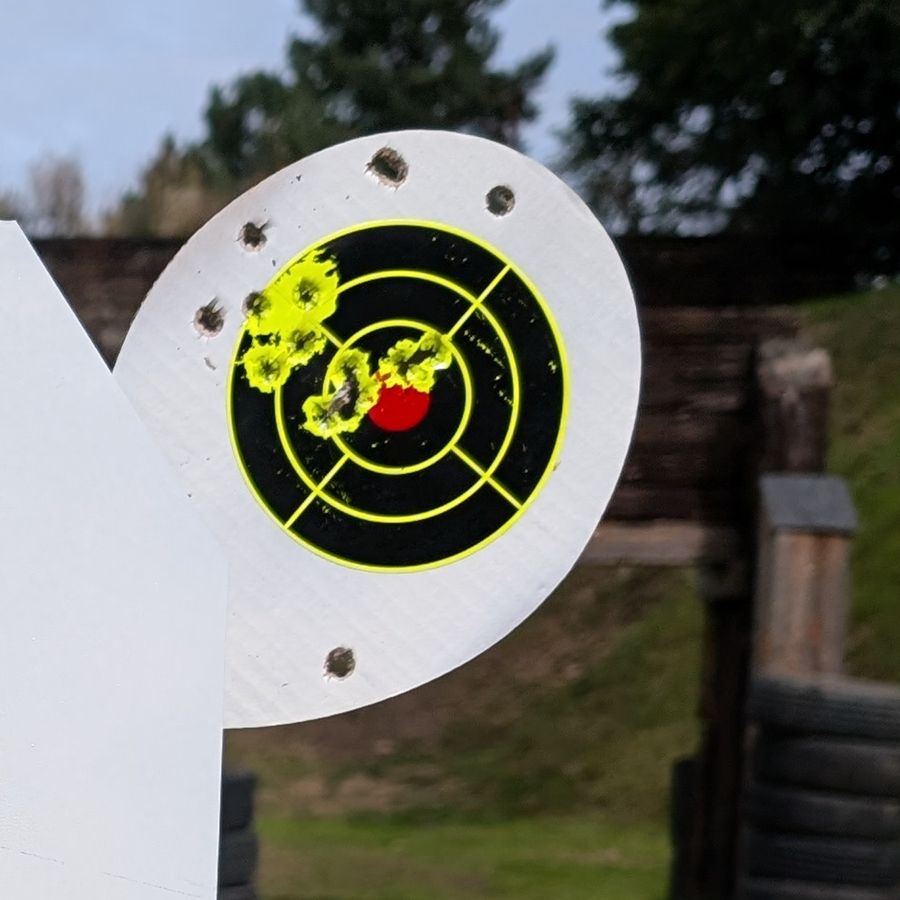
Case photo · caught mid-peek
He does not negotiate. He does not stand still. He always keeps the hostage between you and him – shows his head for a fraction of a second and drops back out of sight. Witnesses report him leaning low by the shoulder, high above the hostage’s head, or barely pushing his forehead past the edge of cover. You never know where he surfaces next.
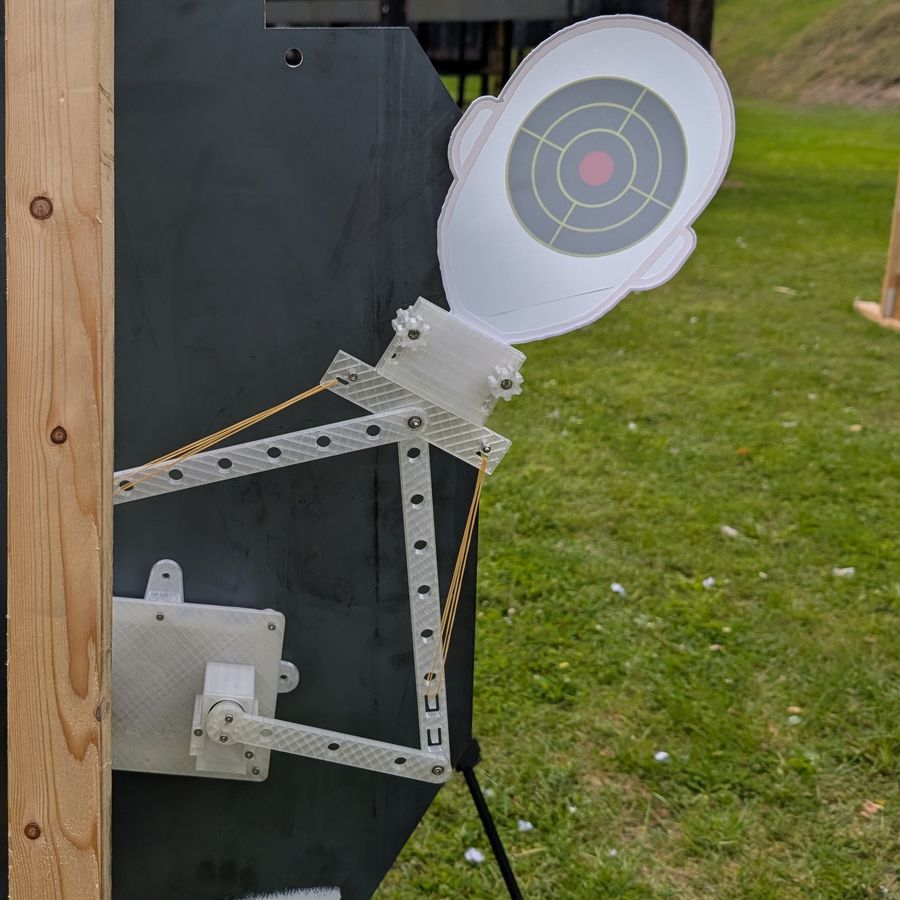
Behind the alias sits a hostage-rescue target of our own build: precise mechanics, strong motors and a control panel in your phone. Scenario training that used to need a mate pulling the target on a cord from a safe spot, or expensive automation with cables and a compressor – now it takes a phone.
You move the head by hand to where it should appear and store the position with one button – up to 32 taught positions. The motors measure their own position and return to the same points every time, so every competitor gets exactly the same stage. No more “yours was easier”.
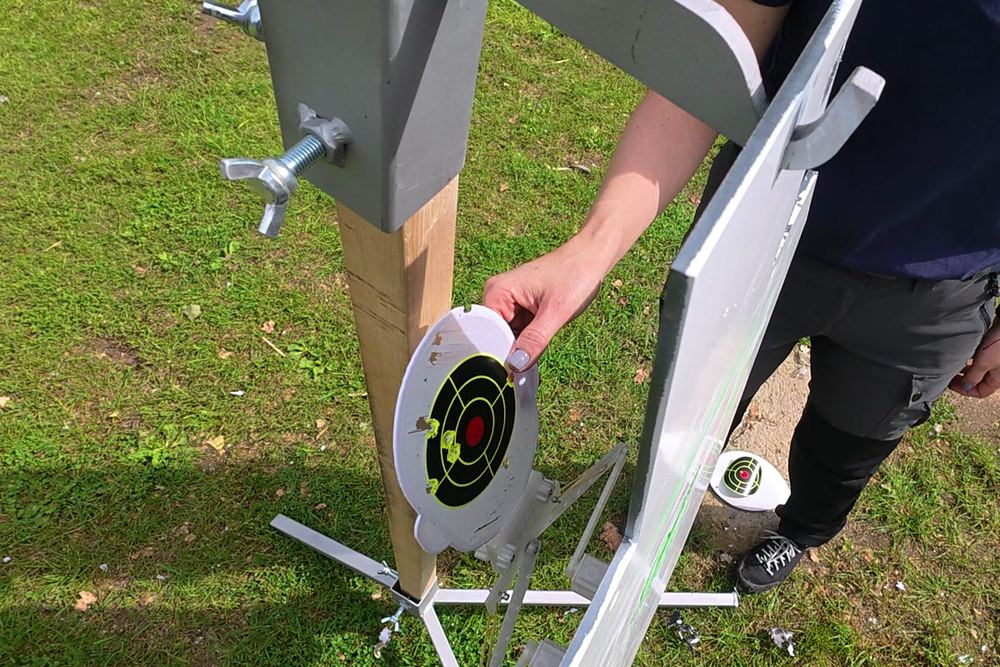
Teach-in · you set the head by hand, the mechanism remembers the point
The target brings up its own Wi-Fi network – no internet, no app to install, no account to create. Connect your phone, open the browser and everything is under your thumb: positions, sequences, random order, a live view of the mechanism and a touchpad for steering the head by hand. Every unit has its own password – nobody on the next bay takes over your hostage taker.
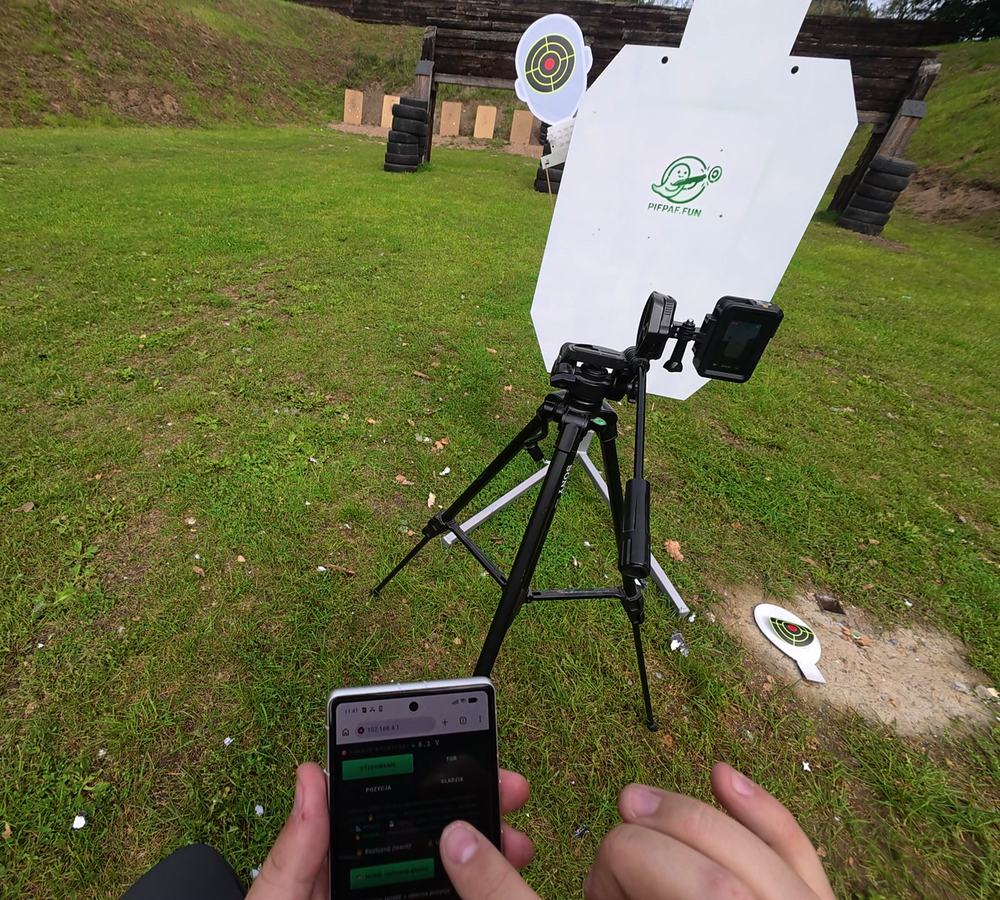
Browser panel on a phone · the target’s own network, no internet
Par time: the head shows for a set exposure and drops – you either made it or you didn’t. Stages: build a run out of stored positions (up to 8 stages of 32 moves) and play it back identically for every shooter – or shuffle a new order with one button. And when you want it harder, switch on the handicap: the head drifts gently around the position the way a real person does, nervously checking the room from behind the hostage.
Exposure window · the head shows for a moment and is gone
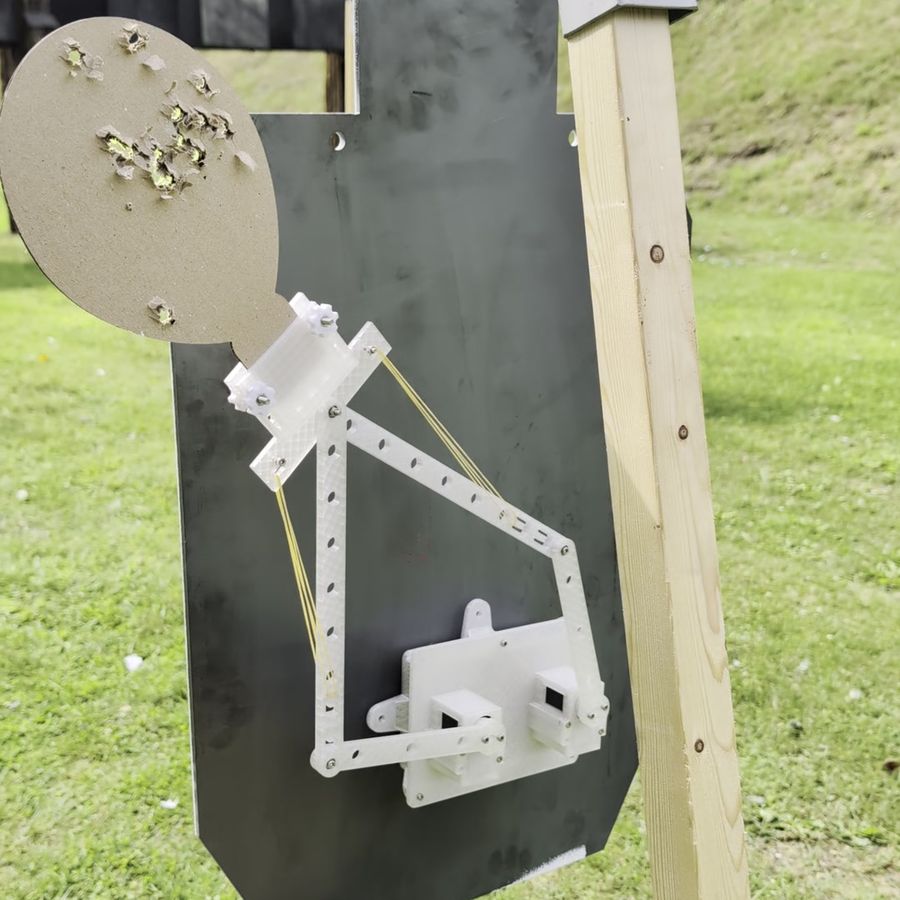
You shoot plain cardboard – the head swaps out in under a minute, with no tools, tightened down with printed knobs. The mechanism runs off a USB-C rechargeable battery – one charge covers over 6 hours of training – and looks after itself: if something blocks the movement, the target backs off and tries another path, and the working stats (run time, incidents, battery state) are in the panel. The hostage? A steel silhouette – it stops the misses and shields the mechanism.
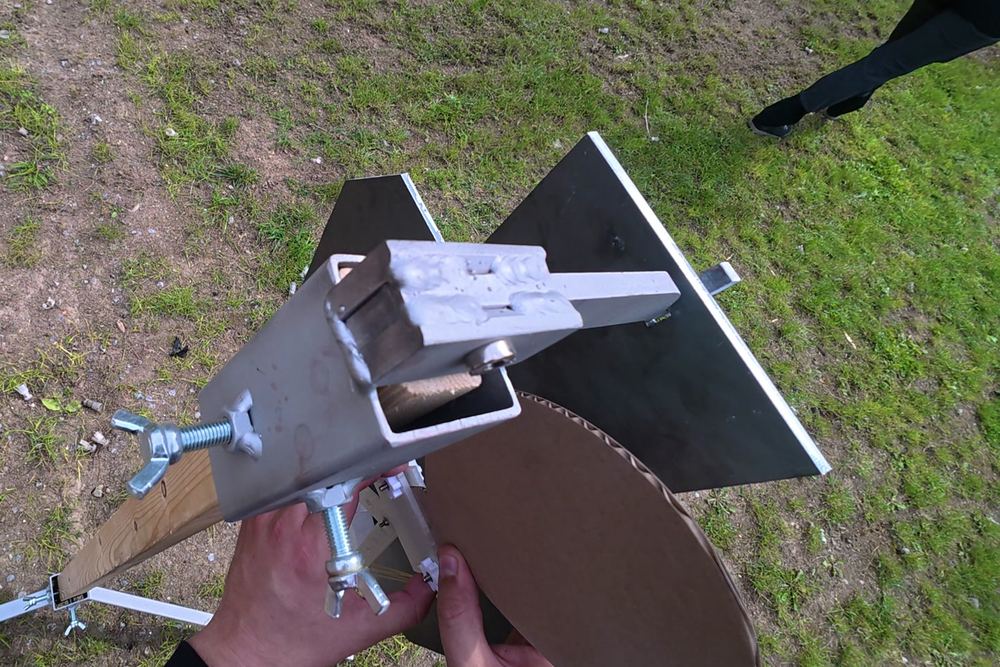
Head swap · under a minute, no tools
A static target teaches you to aim. This one teaches you to decide – when the shot is clean, and when you are risking the hostage.
Sometimes the head is fully exposed, sometimes it barely clears the hostage. You learn to read which shot you are allowed to take – exactly the skill a hostage rescue scenario demands.
A few seconds and the head is gone. Par time forces you to mount, assess and decide fast – no mercy and no arguing with the timer.
A saved stage replays to the position and to the second. You can run a match where the result depends on the shooter, not on how the crew felt that morning.
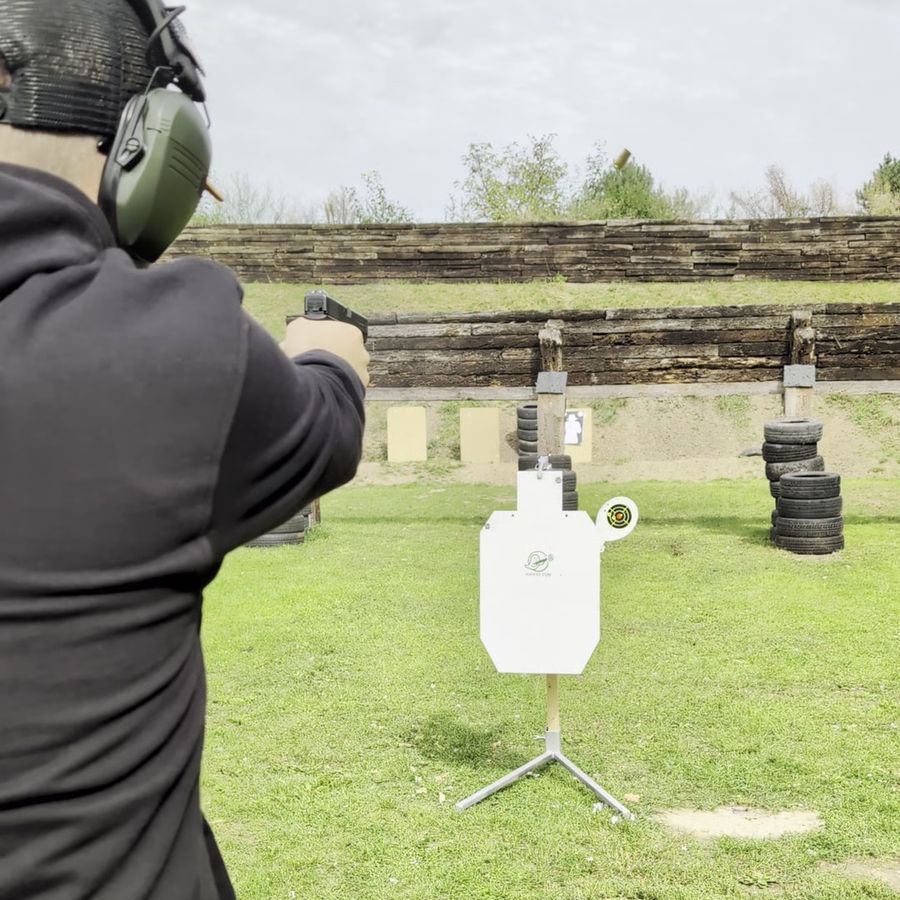
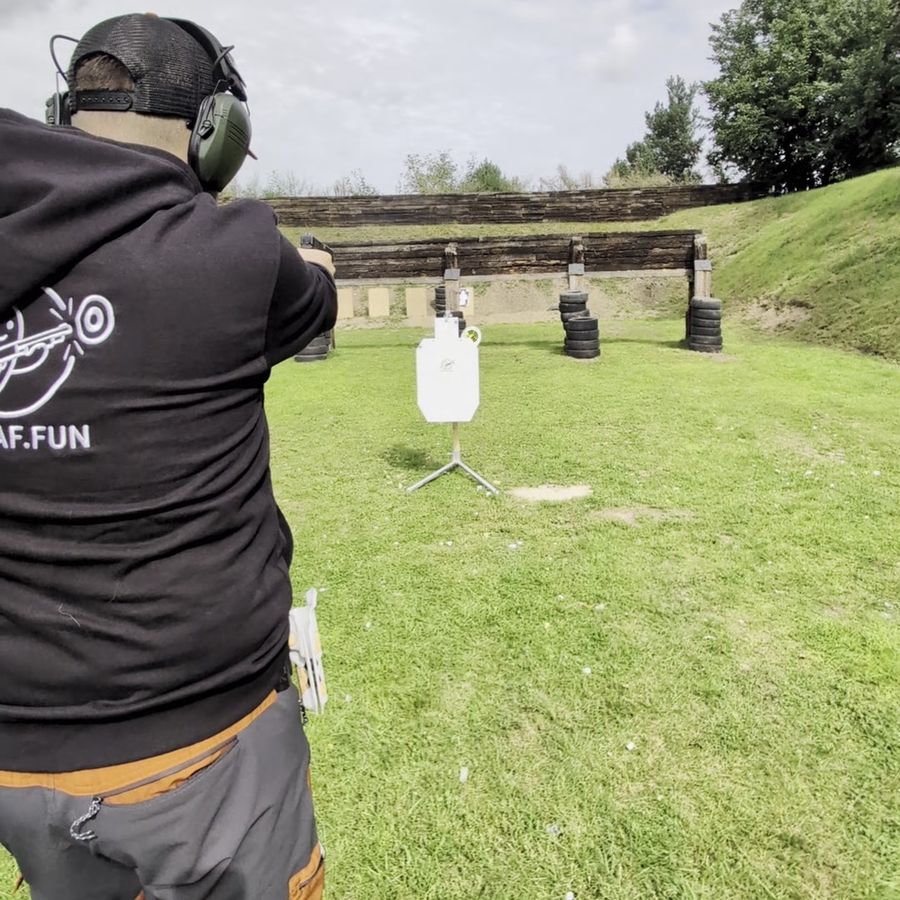
Magnet mounting, its own battery, Wi-Fi from the device itself. No cables running downrange, no compressors, no control boxes.
The cardboard head is the only wear part. The steel hostage silhouette stops the misses, and the mechanism sits safely outside the impact zone.
Mechanics, electronics and software – Zjawa.IT / PifPaf.fun. Firmware updates go over the air, and we keep adding features based on what shooters ask for.
Attach the mechanism with magnets, fit a cardboard head, join the target’s network with your phone. From opening the case to ready – a few minutes.
Guide the head by hand to every spot it should lean out from and store them in the panel. Build a stage out of them, or leave the shuffling to the machine.
The head hides behind the hostage, leans out inside the exposure windows you set and drops back. You have exactly one job: a clean shot.
The device is placed outside the impact zone – the only thing being shot is the cardboard target.
Write to us – we will go through availability, pricing and how the bay is set up, and show you the target working. Fair warning: once you have seen it, a static target stops being enough.
✉️ szkolenia@pifpaf.fun PifPaf